


Isabelle Legeron is a renowned Master of Wine and the founder of RAW WINE. She is a pioneer in biodynamic and natural wines and advocates for sustainability as well as authentic wine experiences.
Her expertise and passion have made her a leading voice in the wine world. We met at the Wine Symposium in Lech in December 2024, which took place as part of the Arlberg Weinberg event. Her passion inspired us to conduct this interview.

Exclusive Interview with Isabelle Legeron, Master of Wine and founder of RAW WINE
Annett Conrad: Let us talk about your personal background. You are one of the few women worldwide to hold the title of Master of Wine. What inspired you to pursue this demanding path, and what was the biggest challenge along the way?
Isabelle Legeron: I was born into a winemaking family and grew up on a farm in Cognac. We lived in close connection with the rhythm of nature and changing seasons. We also experienced first-hand the health issues associated with a heavy use of pesticides, thanks to the industrialisation of agriculture in the surrounding region.
Working with natural wine is a way for me to continue this connection with nature, find community with likeminded people and improve transparency across the wider wine world. When I first started out, there was a lot of skepticism about natural wine and it was really challenging to get it into restaurants and shops. Now, it’s a totally different kettle of fish.
If you want to change a system, I think it’s better to do so from within – you need to gain an understanding of the establishment in order to have any major contribution to it. It was important for me to have an understanding of classic wine regions and styles, to gain a clear perspective of where natural wine had the potential to sit within the global industry.
Annett Conrad: You are considered a pioneer for natural wines. What led you to focus on this specific field, and how has your vision evolved since the beginning?
Isabelle Legeron: It really comes down to my fundamental belief that nature is perfect and we need to work with it, rather than trying to control or force it. Ultimately, when you want to craft amazing wines that are truly terroir-driven, you need to farm organically.
I’m interested in how nature and the environment translates into wine, and how the growers we work with are able to create something in the bottle that’s alive, authentic and with great purity of flavour.
My vision hasn’t changed – but it’s amazing to see what we’ve achieved in the last 15 years. When we first started on this path, natural wine as a term didn’t really exist and, as a concept, only existed on a very underground, sub-cultural level. Now, natural wine is available almost everywhere in the world.
I feel a great sense of achievement to know that I – along with the RAW WINE team and global community of winemakers – have contributed to this landscape in such a significant way.

Annett Conrad: You’re the founder RAW WINE. What was the key impulse behind creating the RAW WINE platform, and how has the community developed since its inception?
Isabelle Legeron: When I founded RAW WINE, I was based in the UK and there really wasn’t a lot going on in the way of natural wine. At the time, this wasn’t even my main job – I was consulting and advising restaurants – but I had a clear sense that there was this gradually evolving scene, and that it’d be great to do something in London to celebrate it.
I had also been struggling with the lack of transparency in wine. People had this perception that it was made purely of grape juice and, for the most part, that just wasn’t the case. Consumers had no idea what they were really drinking. I wanted to initiate more of a conversation on this.
Then and now – because our work has only really just begun – I wanted wine to be approached in the same way as food. For people to have the same awareness of what they’re choosing to consume, like they do when shopping for bread, cheese or even organic produce.
I wanted to educate people on how wine is made and on the additives used, so that they could make more of a conscious decision and choose to support growers working in a more sustainable way. To create a virtuous circle that supports these producers to sell more wine and reach wider, international markets.
We started RAW WINE with just one fair in London and now have eight or nine events around the world each year, having expanded to Vienna, Berlin, New York and Los Angeles, and now Paris, Montreal, Copenhagen, Verona, Tokyo and Shanghai.
We’re also more than just a fair now – we’re a community. Our website lists thousands of winemakers and attracts between 40,000 and 50,000 unique visitors every month – all people who are keen to learn more about these growers. It’s amazing to reflect on just how much we’ve achieved.
Annett Conrad: RAW WINE stands for transparency and authenticity in winemaking. What sets RAW WINE apart from other wine movements, and how do you aim to further promote these values?
Isabelle Legeron: RAW WINE has an incredibly strict Charter of Quality. Joining our community and pouring at a fair requires a very involved process for the producers. They must cultivate their grapes using 100% organic farming methods at the very minimum, and vinify their wines with minimal intervention. They must complete a questionnaire about their farming and winemaking practices, and submit their wine analysis data. Their sulfite levels must be significantly lower than EU standards.
Once they meet these criteria, producers then must obtain a recommendation from an existing RAW WINE community member, and send wine samples so that I can taste them before making a final decision. It may sound a lot, but it’s important that, as we grow, our work continues to draw attention to artisans who are working naturally – and with a sincere respect for and commitment to the environment.
To increase transparency, we have a colour code system we use at the fairs to give consumers and wine industry an immediately clear sense of the level of sulfites being used by each winemaker and allow them to make choices accordingly. We’re also the only wine fair to publish incredibly thorough information on every single wine being poured at each fair.

Annett Conrad: Successes and challenges are two keywords for the future. What has been RAW WINE’s greatest achievement so far, and what challenges do you see for the movement today?
Isabelle Legeron: Our greatest achievement is for the RAW WINE community to become truly international. RAW WINE Tokyo – our first ever fair in Japan which completely sold out – is a really nice indicator of this, and not at all a small undertaking. It’s a testament to the trust our growers have in us. A trust that when we choose a new location, we will research and execute it well, with their interests front of mind. The community itself has also become truly diverse – with some growers who produce as little as 2,000 bottles per year joining us from most winemaking regions.
In terms of challenges, just making and selling wine in this economy is incredibly tough. People are price sensitive and drinking less wine, so there’s a surplus of production. It’s an industry in distress. Thankfully for us, consumers of natural wine are a lot more loyal than a lot of the wine industry – they’re loyal to a philosophy, to the story and the ethics of a producer. But because natural wine has become this popular, there’s a lot of people pretending that what they’re making is natural – when it’s not – because they know it will sell better. This is why a rigorous Charter of Quality is so important.
Annett Conrad: A lot of people don’t believe in Natural Wine as the future of winemaking. Do you see natural wines as a niche product or as the future mainstream? What needs to happen for natural wines to gain even greater acceptance?
Isabelle Legeron: It’s true that some people still don’t believe in organic farming, but the audience that does is slowly expanding. Gradually, more and more people are realising that a future with healthy, regenerative agriculture is the only future we have. And with that, more people are seeking out a more alive, authentic and natural wine. The demand is growing everywhere.
In some wine markets, like France, you could say that natural wine is already well established. It’s the emerging markets – like Brazil, India and China – that present a real opportunity to educate the consumer. This is why we’re launching RAW WINE Shanghai this year. Converting someone to natural wine takes time. They need to understand the differences in agriculture, winemaking, fermentation and additives, but there’s a lot of emerging markets where this is already starting to happen.
Annett Conrad: And talk about sustainability and consumer behavior: What role do sustainability and growing awareness of natural food and beverages play in the increasing popularity of natural wines?
Isabelle Legeron: The growing awareness of sustainability and the increase in natural wine’s popularity are absolutely linked. As an industry, we’re simply following in the footsteps of what’s happened – and is continuing to happen – in other industries, such as food and fashion.
People are now more aware of what they’re wearing and the sustainability of the clothing industry. Awareness is expanding across all industries on a global scale. What makes wine a little harder is the lack of transparency – it’s more difficult for consumers to understand what additives are being used.
But certainly this increase in awareness is a really positive development within consumerism – people are more concerned about how and where they spend their money.
Annett Conrad: In your opinion, what are the biggest trends in natural wine for the coming years, and how do you see the role of winemakers in this transformation?
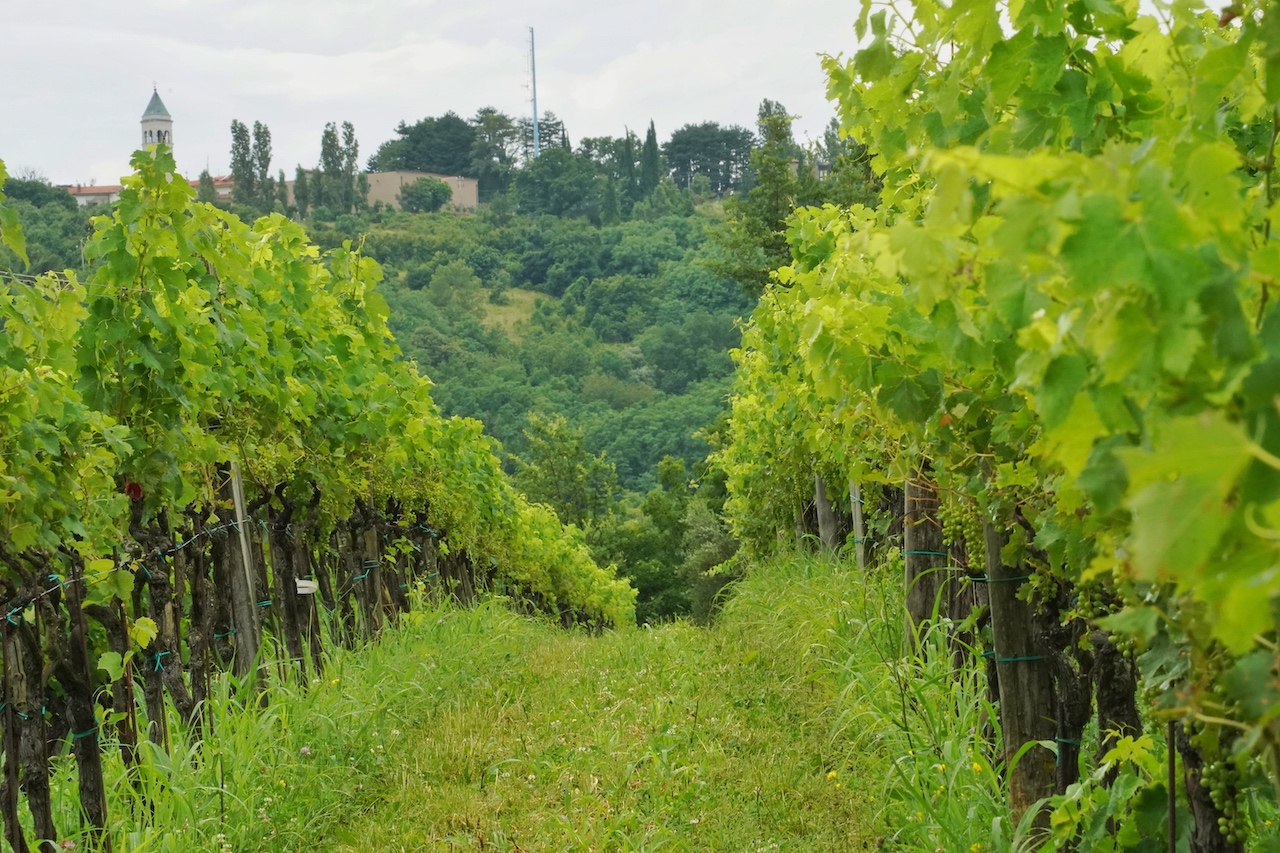
Isabelle Legeron: I think packaging in wine is something that’s going to become a bigger topic of conversation. There are already schemes encouraging people to reuse wine bottles, because there’s currently so much waste. We need a more circular economy – where wine bottles can be collected, cleaned and reused. People are also trying to move away from using clear glass, and even towards more bulk-friendly packaging such as ‘bag in box’ wine, cans and kegs – which all carry a lighter environmental load.
I also see co-fermentation developing even further. A lot of growers are surrounded by fruit production and, with the decline in consumption of cider and perry, there are a lot of abandoned orchards. There’s now a move towards using this fruit for co-ferments – combining grapes with apples and other fruits. These co-ferments are a testament to the open-mindedness of natural wine consumers. As long as it tastes good, a wine doesn’t have to come from a famous region or contain a classic varietal. It can come from central Europe and be made from an unknown varietal – which is leading to the rediscovery of old terroirs in places like Hungary, Serbia or the Czech Republic for example.
People who are interested in natural wine are generally very open-minded and worry less about drinking a specific variety, and care more about the ethics behind the business, the land and the producer. It’s created a really nice, generous drinking culture. Personally, I don’t really care what the grape variety is as long as it’s come from a beautiful farm that’s been treated with love and respect.
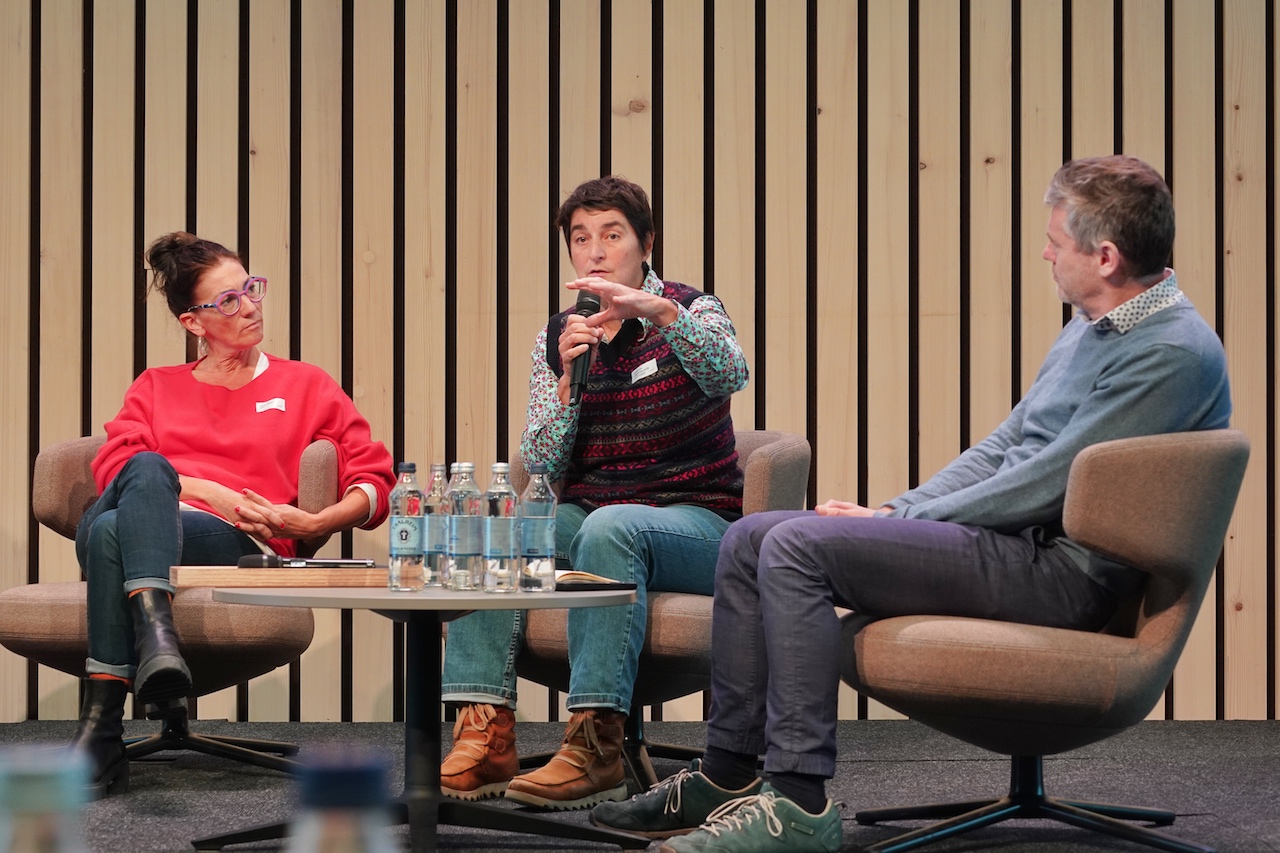
Annett Conrad: When we think of the Wine Symposium in Lech, do you see Austria playing a central role in the field of natural wines?
Isabelle Legeron: We’re seeing a lot of amazing developments in Austria in terms of the producers, but we now need to convince the consumer. They don’t seem to be quite as open minded, as they’re used to drinking certain brands and styles. Aside from Vienna, it feels like there’s still a long way to go.
At the end of the day, we need to convince everyone. There shouldn’t be a glass of wine that’s not organic. We’re in an industry of luxury – grapes aren’t an essential crop, so there’s really no excuse to not farm organically in the very least. You shouldn’t be allowed to grow grapes in a way that pollutes the environment and water system, and kills birds and wildlife, all to turn your crops into alcohol that gets drunk. It’s just not ethical.

More informations
Isabelle Legeron
RAW WINE
505 Albert House, 256 – 260 Old Street, London, EC1V 9DD, GBR
Editor’s Note: The statements, assessments, and opinions expressed in this interview reflect solely the personal views of the interviewee. The editorial team does not adopt these statements as its own; responsibility for their substantive accuracy and legal assessment rests exclusively with the interview.



